|
| |
 |
| |
| Copper, Copper Nickel, Brass, Titanium. Inconel, Monel, and Stainless Steel Tubes |
| |
Step 1:
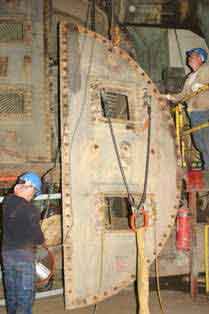
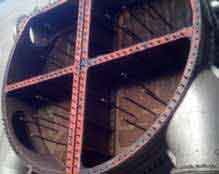
The 1st step is to remove at both ends the water box / cover flange bolts from both ends and then the covers "door's". In some situations the water boxes are removed.
|
 |
Step 2:
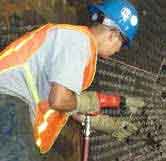
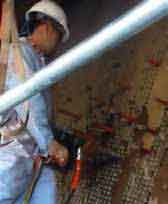
The 2nd step is to cut the tubes behind the sheet at one end of the condenser.
|
 |
Step 3:
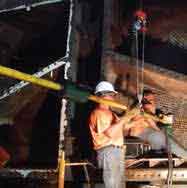
The 3rd step is to pull the tube free. It is "popped" on the opposite end of the condenser about
4 inches from the face of the tube sheet.
|
 |
Step 4:
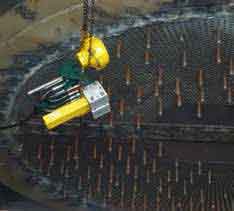
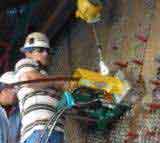
The 4th step is to place a high volume Extractor over the "popped" tube to remove and flatten the entire tube.
(outer steel shell not shown)
|
 |
Step 5:
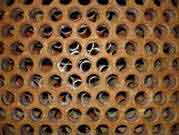
The 5th step is to pull the stubs from the tube sheets left in place from the first step.
|
 |
Step 6:
The 6th step is to saw the tube sheets, typically of Muntz Metal or Naval Brass, into smaller pieces so they can be safely removed
and then palletized. The condenser shell is typically left fixed in place.
|
 |
Step 7:
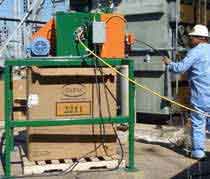
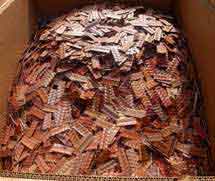
The 7th and final step is to feed the tubes through a chopper that flattens and chops the tubes into
small pieces which is a highly desirable form of feed stock for mills and smelters. All the tools
used to perform steps 1 thru 7 are air, hydraulic or electrically powered. This process does not
produce smoke, fumes, sparks, molten metal or other hazardous conditions.
|
 |
|
To support a 5 to 8 man field crew, PSR provides a semi-truck field office and tool trailer ( F.O.T.T.) to the site.
Depending on the projects requirements and available power and air supply the company mobilizes fork trucks, cranes,
compressors, generators, lavatories and other equipment to the site.
|
 |
|
| |
|